
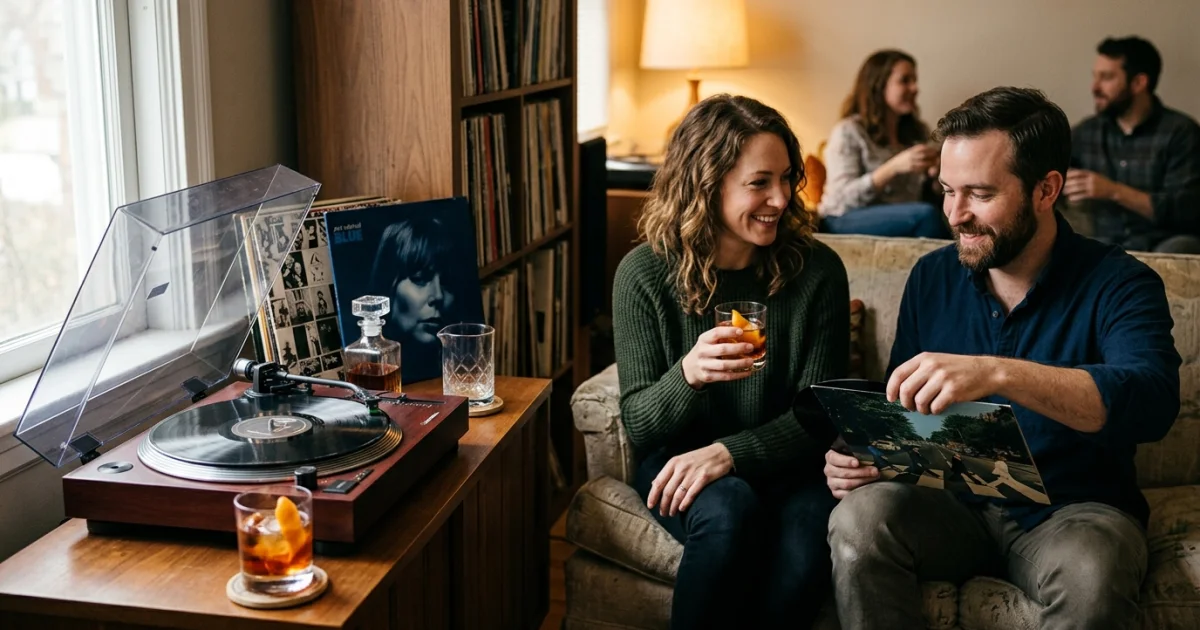
How to Host a Vinyl and Cocktail Night Without Turning It Into a Production
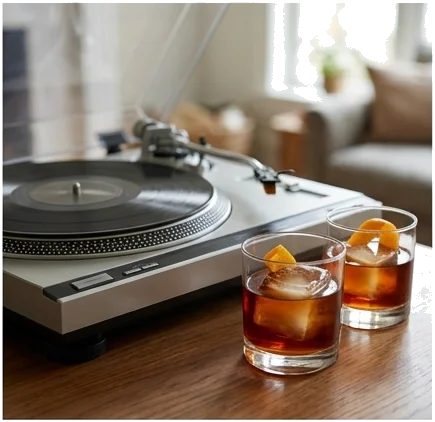
A good vinyl-and-cocktail night is simple on purpose. I think the best version feels relaxed, adult, and slightly unrushed, with a few records, a short drink list, and enough space for conversation. The goal is not to stage a perfect event. It is to create a calm evening where the music and the drinks support the mood instead of competing for attention. That is why an adult bar night works best when drinks, music, and conversation stay in balance.
When I host this kind of night, I plan less than people expect. I choose a small stack of records, decide on one or two cocktails, chill the glassware, and keep water nearby. That is usually enough. A vinyl night works best when it feels like a gathering, not a performance.
What makes a vinyl and cocktail night feel effortless?
The short answer is restraint. Too many records, too many ingredients, and too many “fun” ideas can turn a quiet evening into work. I prefer a setup that lets the host stay present. In practice, that means you are making choices before guests arrive so you are not stuck mixing, flipping records, and improvising all at once.
Start with the room, not the menu
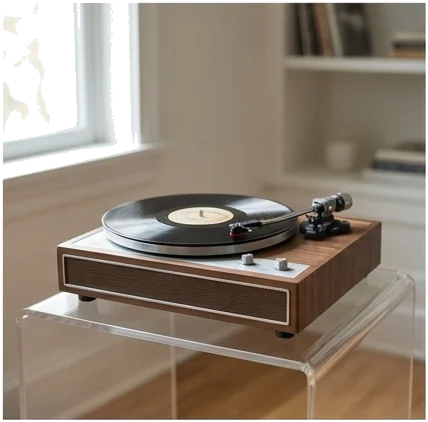
The atmosphere begins before the first pour. Soft lighting, a clean table, and a clear place for the turntable matter more than decorative extras. I like to keep the listening area uncluttered. A record sleeve needs a safe place to rest. So does a drink. If people have to worry about bumping a stack of records or knocking over a cocktail, the evening stops feeling calm.
- Use warm, low lighting instead of bright overhead lights.
- Keep the turntable away from drink spill zones.
- Leave a small flat surface for coasters, napkins, and an ash-free setup.
- Set out water in easy reach so no one has to ask twice.
Choose a few records, not a full program
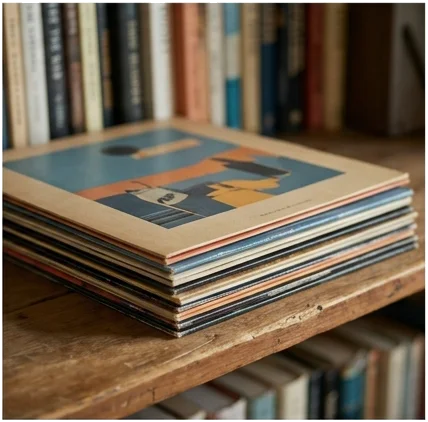
I usually pick three to five records for the night. That is enough variety without turning the evening into a schedule. A small stack also keeps the mood coherent. If the room is quiet and conversational, I lean toward records with steady pacing and fewer abrupt changes. If the group is more social, I use music that feels familiar and easy to drift in and out of.
A helpful rule is to think in arcs. I like an opening record that welcomes people in, a middle record that carries the evening, and one closing record that feels like a gentle landing. That approach keeps the night moving without constant decisions.
How many cocktails should you serve?
For most home gatherings, one signature cocktail is enough. Two is the upper limit if the drinks are different in style and easy to execute. A short list keeps the host free and helps guests understand what kind of evening they are having. In an adult setting, simplicity often feels more generous than variety.
What a short drink list looks like

I like to build a menu around one spirit-forward drink and one lighter option. For example, a whiskey cocktail and a spritz-style drink work well together. A gin sour and a highball can also make sense. The point is not to cover every base. It is to offer contrast without overcomplicating the bar. If rum is part of the plan, a guide to rum drinks can help you choose a style that fits the mood of the night.
- Pick one main cocktail and one optional second drink.
- Use ingredients you can measure quickly and repeat reliably.
- Avoid drinks that require many fresh ingredients unless you prep them in advance.
- Keep a zero-proof option on hand so non-drinking guests feel included.
If you want a lower-effort setup, serve one batch cocktail and one simple build. A batched drink can be pre-mixed and chilled, then poured over ice or served up. A simple build might be gin and tonic, rum and soda, or a whiskey highball. In bar language, a highball is a drink served in a tall glass with a spirit and a larger non-alcoholic mixer, usually over ice.
Which drinks work best for a calm evening?
At home, I favor drinks that are balanced, easy to batch, and not too fussy. Clear flavors are easier to match with music and conversation. A cocktail should support the tone of the room, not dominate it.
| Drink style | Why it works | Best home setup |
|---|---|---|
| Highball | Light, refreshing, and easy to pour | Tall glass, plenty of ice, soda or tonic |
| Stirred cocktail | Quiet, spirit-forward, and elegant | Mixing glass, bar spoon, rocks or coupe glass |
| Sour | Bright and familiar, with citrus balance | Shaker, citrus, simple syrup, coupe glass |
| Low-ABV drink | Slower pace and less intensity | Vermouth, aperitif, soda, or light wine-based mix |
| Zero-proof option | Inclusive and easy to sip throughout the night | Tea, citrus, bitters-free spritz, or tonic with garnish |
ABV means alcohol by volume, and proof is a related way to measure strength. For a relaxed night, I usually lean toward moderate-strength drinks rather than heavy pours. That keeps pacing natural and helps everyone stay comfortable.
Keep the recipes uncomplicated
A few classic combinations are enough. A whiskey drink with bitters, a gin drink with citrus, or a rum drink with a clean mixer can cover most moods. Bitters are concentrated flavoring drops that add depth in small amounts. Syrup is simply sugar and water, often used to soften citrus or strengthen balance. Garnish should be functional, not decorative clutter. A lemon twist, an orange peel, or a lime wedge is often enough.
- Whiskey, bitters, and a citrus twist for a simple stirred drink.
- Gin, tonic, and lime for an easy highball.
- Tequila, citrus, and a small amount of syrup for a bright sour-style cocktail.
- Rum, soda, and a clean garnish for something light and flexible.
How do you keep the evening adult and relaxed?
In my experience, the adult part comes from pacing and courtesy, not from trying to look sophisticated. A relaxed evening has room for conversation, pauses, and the occasional silence while a side B plays. Nobody needs to perform knowledge about records or cocktails. The host just needs to make the room feel easy to inhabit.
Use pacing instead of pressure
One simple rule helps a lot: serve smaller pours and make water visible. That keeps the night from escalating too quickly. If you want to keep things slow, do not refill automatically. Let guests choose their pace. A good host makes it easy to drink thoughtfully, not automatically.
- Offer water before the first cocktail is poured.
- Serve snacks with salt, fat, or protein so drinks do not arrive on an empty stomach.
- Use smaller glasses when the drinks are strong.
- Leave room for a guest to choose a non-alcoholic drink without comment.
Choose snacks that fit the tone
I like food that does not take over the table. Nuts, olives, cheese, crackers, and simple savory bites work well because they are easy to set out and easy to leave alone while the music plays. Heavy food can be fine, but the best vinyl nights usually benefit from snacks that feel casual and low-maintenance.
What mistakes make a vinyl night feel overproduced?
The most common mistake is trying to make every detail “special.” That usually creates more work for the host and less ease for the guests. Another mistake is making the drink menu too ambitious. If each cocktail requires three kinds of garnish, fresh fruit, a blender, and a last-minute garnish torch, the evening starts to feel like a shift behind the bar.
- Too many records spread across too many moods.
- Multiple cocktails that all need different tools and glassware.
- Decor that gets in the way of moving around the room.
- Playing music too loudly for conversation.
- Forgetting water, ice, or a simple zero-proof option.
Another subtle problem is over-explaining the playlist. You do not need a lecture before every record. If people want to talk about an album, they will. The best vinyl nights let the music do its work without a commentary track.
What tools actually matter at home?
You do not need a full bar setup. A few dependable tools are enough for a polished but calm evening. I would rather have a solid shaker, a jigger, a bar spoon, and decent ice than a shelf full of gadgets I never use. Good ice matters more than people think. Clear, solid cubes melt more slowly and keep drinks from tasting watered down too fast.
- Shaker for citrus-based drinks.
- Mixing glass and bar spoon for stirred cocktails.
- Jigger for consistent pours.
- One rocks glass, one coupe, and one highball glass style.
- Ice bucket or easy access to freezer ice.
- Coasters and napkins to keep the record space safe.
Responsible hosting matters
A thoughtful night includes the option not to drink. Some guests may prefer zero-proof drinks, and that choice should feel completely normal. I also like to remind myself that the goal is comfort, not volume. Alcohol should never be framed as necessary for fun, connection, or relaxation. If anyone is driving, rideshare or a designated driver should be arranged in advance.
Legal drinking age rules apply, and a calm house party is a better fit when everyone is of legal age and comfortable with the plan. A steady pace, food, and water are part of good hosting, not afterthoughts.
Final takeaway
A vinyl and cocktail night works best when it stays small, clear, and unforced. Pick a few records, keep the drink list short, and focus on making the room comfortable. If the host is not overextended, the evening usually feels more inviting. That is the real charm: music, a couple of well-made drinks, and enough quiet structure for people to settle in.
Frequently Asked Questions
How many records should I choose for the night?
Three to five records is usually enough. It gives you variety without turning the evening into a playlist you have to manage constantly.
What is the easiest cocktail style to serve at home?
A highball is one of the easiest options. It uses a spirit, ice, and a mixer like soda or tonic, so it is quick to build and easy to repeat.
Should I make different drinks for every guest?
No. One or two drink options is plenty for a relaxed home gathering. A short menu is easier to execute and feels more intentional.
What glassware do I actually need?
For a simple night, a rocks glass, a coupe, and a highball glass cover most needs. You can do a lot with those three.
How do I keep the night from feeling too formal?
Keep the lighting soft, the menu short, and the music unforced. Let conversation and listening happen naturally instead of trying to script the evening.
Leave a Comment