
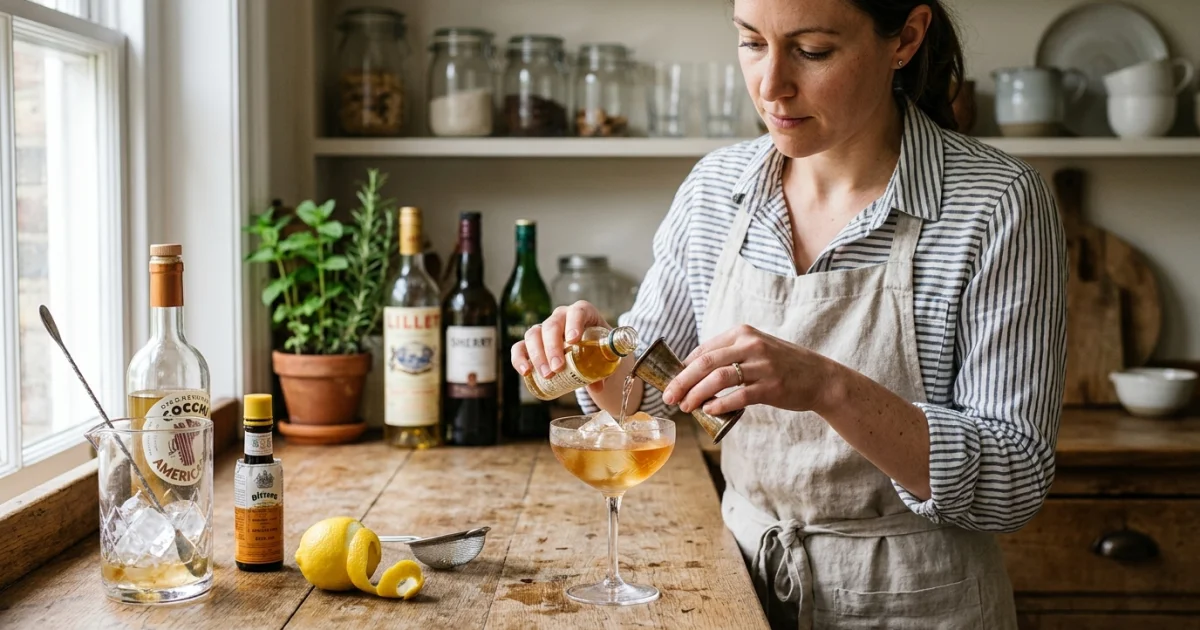
Low-ABV Cocktails: How to Make Lighter Drinks Without Losing Flavor
Low-ABV cocktails use ingredients with lower alcohol content to create balanced drinks that still deliver depth through careful choices in vermouth, sherry, bitters, and dilution. They keep flavor by focusing on texture, aroma, and complementary elements rather than relying on high-proof spirits alone.
What Does Low-ABV Actually Mean?
ABV stands for alcohol by volume, the percentage of alcohol in a drink. Low-ABV cocktails typically fall between 5 and 15 percent, compared with 20 to 30 percent in many classic cocktails. This range allows for longer sipping sessions while preserving the structure of a proper drink.
How Do Vermouth and Sherry Add Depth?
Vermouth brings herbal notes and a touch of sweetness that stand up well to soda or tonic. Sherry offers nutty or dried-fruit character that pairs cleanly with citrus. Both ingredients carry enough flavor on their own that the finished drink does not taste thin even when alcohol is reduced.
Common Low-ABV Formats That Retain Flavor
- Spritzes combine sparkling wine or vermouth with soda and a citrus peel for bright, effervescent drinks.
- Highballs pair a modest measure of spirit with plenty of ice and soda or tonic, keeping the focus on aroma and refreshment.
- Sherry cobblers use chilled sherry over crushed ice with fruit and a light sweetener.
- Bitter aperitivo drinks rely on gentian and citrus notes to create complexity without heavy alcohol.
Practical Steps for Making These Drinks at Home
- Start with quality ice so dilution happens slowly and evenly.
- Measure precisely; even small pours of vermouth or sherry need balance.
- Choose glassware that fits the drink volume, such as a large coupe for spritzes or a tall highball glass for longer serves.
- Add bitters in small dashes to lift aroma without overpowering.
- Finish with fresh citrus peel expressed over the surface rather than large wedges that can water down the mix.
Common Mistakes That Lead to Watery Results
Too much ice without enough flavoring ingredients is the quickest way to dilute taste. Another frequent error is using flat soda or tonic that fails to carry aroma. Over-sweetening also masks the subtle notes that make low-ABV drinks interesting in the first place.
Responsible Pacing at Home
Low-ABV drinks invite slower enjoyment. Offer water alongside each cocktail and keep pours modest. Every guest should feel free to choose a zero-proof option without explanation. Plan food if serving several rounds so the evening stays comfortable. For a more social setup, you can also plan a home bar night with drinks, music, and a few digital entertainment options that keep the mood relaxed.
Final Takeaway
Low-ABV cocktails succeed when flavor is built from the start through aromatic ingredients and controlled dilution rather than added at the end. The result is a lighter drink that still feels complete in the glass.
Frequently Asked Questions
Can low-ABV cocktails still taste strong?
Yes. The strength comes from concentrated flavors in vermouth, sherry, and bitters rather than alcohol volume alone.
What glassware works best for these drinks?
Tall highball glasses suit spritzes and highballs; smaller coupes work well for sherry-based serves where less dilution is desired.
How much ice should be used?
Use enough ice to chill the drink quickly but not so much that it melts rapidly and thins the flavor; larger cubes help control dilution.
Are these drinks suitable for longer gatherings?
Their lower strength makes them easier to enjoy over time when paired with water and food and when everyone drinks at their own pace.
Leave a Comment